 Marie-Claire Asseko
The landscape of work is undergoing a profound transformation, leaving many professionals wondering:
How do you build a career that stays relevant, credible, and resilient in an AI-integrated economy?
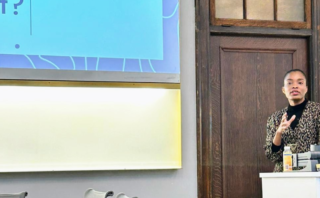
I had the privilege of hosting 2 events of the McGill Alumni Career Coaches program to address that very question: a webinar and an in-person workshop, both titled “Future-Proof Together”.
My goal was to provide participants with a roadmap to transition from being “AI-friendly” to “AI-first”. While attendees received exclusive deep dives into specific frameworks and tools, this article summarizes the high-level takeaways to help you maintain your edge in an evolving labor market.
The Great Augmentation: AI as a Multiplier of Opportunities
One of the most significant themes from the sessions was that AI is not a replacement for human talent, but a multiplier of individual capability. Current data shows that employees using AI report an average productivity boost of 40%. Not because they work harder, but because they work differently.
🎯 Therefore, rather than fearing their jobs replaced, I emphasized focusing on how your unique experience can increase the quality of AI’s outputs.
Additionally, AI is democratizing access to advanced capabilities that once took decades to master; for example, junior analysts can now perform senior-level data analysis, and entry-level designers can produce professional-grade visuals. This shift means that traditional job boundaries are dissolving, allowing for instance accountants to pivot toward data science or teachers to transition into learning experience design.
🎯 To stay relevant, you must use AI to build a portfolio that translates your knowledge into valuable, professional-grade deliverables.
Prioritizing the Right Skills for 2030
I mentioned it many times in my AI series: the World Economic Forum predicts that 39% of core skills will change or become outdated by 2030. The Forum identified a “new skills triad” essential for the modern workforce:
- Artificial intelligence proficiency;
- Virtual intelligence (the ability to manage relationships in remote environments), and;
- Carbon intelligence (understanding sustainability and environmental impact).
While technological literacy, AI, and big data remain the fastest-growing skills from 2024 to 2025, uniquely human cognitive skills are also the most sought-after. Analytical thinking remains the top core skill, followed by resilience, flexibility, and agility.
As automation increases, relational awareness and empathy become key differentiators, as machines still lack the ability to incorporate nuance, contextual understanding, and reasoning elasticity.
Emerging Cross-Sectoral Opportunities
You do not need a technical degree to thrive in the AI era. There are several high-growth, accessible career paths such as
- Prompt Engineering: Focuses on masterfully structuring questions to extract optimal outputs from models like GPT or Claude; it requires an understanding of model patterns rather than coding.
- AI Product Strategy: Leverages organizational knowledge to guide companies through AI transformation, focusing on business process mapping and change management.
- AI Training Data Curation: Involves meticulously labeling data and detecting bias to improve model accuracy, requiring domain expertise and attention to detail.
- AI Ethics and Governance: A critical field navigating regulatory compliance and responsible deployment, particularly in high-stakes industries like finance and healthcare.
I listed other avenues in this article: How to: Use AI to Change Your Career [2025 Guide]
Navigating Barriers: The Reality for Women in Leadership/Tech Roles
A vital portion of the McGill events was focused on the structural and cultural challenges women face in STEM and leadership,. Despite increasing diversity initiatives, women often remain “over-mentored but under-sponsored”.
There is a critical distinction to grasp here: mentorship provides guidance, offering advice on personal development and industry navigation,. However, sponsorship provides advocacy.
A sponsor is a senior leader who uses their organizational capital to actively advocate for your promotion or placement in high-growth areas.
Bridging this gap is essential for overcoming the “broken rung” in the career ladder, where female representation often plummets at senior and executive management levels.
One Immediate Action: Do a Task and Skills Audit
Last but certainly not least, I urged participants to shift from a reactive “hustle” to intentional optimization.
A practical first step you can implement today is to do a “Task and Skills Audit” by breaking down your daily responsibilities:
- You can identify which tasks can be automated (handled by AI), which can be augmented (AI handles the base work, you provide the nuance), and which remain human-critical (requiring your judgment, ethics, and relational intelligence)
- You can analyze your tasks and think about how AI can augment them and how you can increase the quality of AI outputs. And that will help you to define your Human Advantage Statement.
Designing your career for 2030 requires bravery and curiosity. The future belongs to those who view every market shift as an opportunity to elevate their role rather than shrink from it
Want to dive deeper?
You can download the full presentation slides (+ worksheet) from both the webinar and the in-person event here: Future-Proof Your Career in the AI world