 Marie-Claire Asseko
I’ve written about burnout numerous times. Each piece captured a different layer; warning signs, systemic causes, recovery tactics or personal patterns.
Re-reading these pieces years later, I see what I was still too close to name: my approach to high-intensity productivity and quality outputs as badges of honor to uphold at all costs. Even my values.
Inner conflict is the major hidden driver of productivity and burnout issues [at work]—and the most common issue for the leaders I see.
Natalie Rothfels (“Why no productivity hack will solve your overwhelm”, guest post on Lenny’s newsletter, Oct 15 2024)
My burnout profoundly changed who I am, who I aspire to be and what I value.
One thing I want to make clear: I was not “feeling” miserable. Not for a minute.
As far as I was concerned, I was thriving with a minor case of constant tiredness 😅. It took my family doctor, my psychotherapist and my aunt to pull the brakes FOR me. And one other friend to open my eyes to what was going on under the hood.
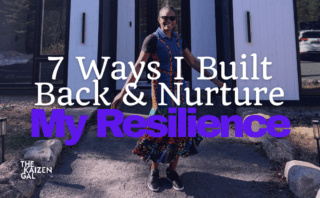
7 Lessons Burnout Taught me About Resilience
These are lessons I’ve learned and realizations I came to as I went through a process of burnout → realignment → resilience → sustainable success.
Lesson 1️⃣ – On Time Management
Resilience isn’t about pushing harder. It’s about recognizing when to pause, listen, and start again with intention.
I messed up time management by treating it as an optimization tool instead of an opportunity for alignment.
➡️ I got efficient at the wrong things 😖: tasks that looked productive but drained my capacity for strategic thinking.
Lesson 2️⃣ – On Purpose
The ambition-purpose gap: when the drive to achieve becomes disconnected from purpose, ambition turns into depletion.
That depletion increases our decision fatigue and we default to whatever requires the least cognitive load, even when it contradicts our long-term goals. Which in turns widens the ambition-purpose gap.
And there you have it: we enter a depletion loop ➰.
Lesson 3️⃣ – On Recovery
We can’t “self-care” our way out of a lifestyle that glorifies exhaustion.
Our bodies do not distinguish between physical stress and psychological strain. They accumulate both as wear on our regulatory systems.
Yes, rest reduces symptoms but only temporarily 😮💨. Without changing the conditions that triggered burnout, we’re just resetting the countdown timer.
- I ignored the stress response of my body many times over. I tried to drown its survival signals with massages, traveling and working out. In vain.
The real fix is redefining what productivity and success look like.
Lesson 4️⃣ – On Misalignment
Our bodies read value conflicts as social rejection, which triggers the same stress response as physical danger. Misalignment becomes a silent threat to our emotional balance.
This is why “pushing through” doesn’t work: it’s like we’re asking our nervous system to ignore survival signals.
Defining one’s purpose then builds a powerful bridge that reconnects and realigns our values to our need for personal fulfillment.
Lesson 5️⃣ – On Resilience
Resilience isn’t bouncing back. It’s building systems that prevent collapse in the first place.
In psychological resilience research, there’s a term that designates the ability to maintain our core identity while adjusting tactics to internal and external demands: “adaptive capacity”.
- As my psychotherapist put it back then: I optimized myself for work so much that I couldn’t realize I was sapping my cognitive capacity for anything not work-related. I lost track of my core identity in that process.
In the end, I understand that the most resilient professionals aren’t the ones who endure the most stress; they’re the ones who detect misalignment early and course-correct before collapse.
Resilience is the dynamic process of recognizing emerging/ongoing patterns and pivoting.
Lesson 6️⃣ – On Sustainability
Resilience isn’t about endurance. We can’t “master” resilience. We have to nourish it.
Leadership studies from Harvard Business Review show that sustainable high performance correlates with “identity clarity”: knowing what you’ll sacrifice for success and what remains non-negotiable.
Professionals who burn out aren’t working too hard; they’re working against themselves.
Lesson 7️⃣ – On Productivity
The cost of burnout isn’t just productivity. It’s the erosion of our ability to make decisions aligned with who we are.
Studies have shown that through repeated exposure to stress, “executive regions of the prefrontal cortex thin and disconnect, blunting cognitive control and emotional regulation; the caudate and putamen shrink, slowing thought and action“.
We’re not just “losing our edge”. The part of our brain responsible for decision-making and self-regulation is eroding. We start operating from survival mode, not strategy.
⬇️ What Changed Now? ⬇️
I learned SO MUCH about myself, and I thank God for turning this derailing event into a recalibration opportunity.
- I now build systems around energy management 🔁, not just time management.
- I help women spot misalignment before it costs them their mental health 🎯.
- I teach sustainable productivity ❌ not hustle culture with better branding.
TL;DR — From Burnout to Breakthrough: 7 Lessons Learned
I held a lot of shame about my burnout. I thought of it as evidence of my personal failure. A flaw in how I’ve built my professional identity.
Now I see it as my transformation story, a multifaceted learning experience 🙏🏽:
- Resilience isn’t about pushing harder. It’s about knowing when to pause, listen, and start again with intention.
- The ambition-purpose gap: when the drive to achieve becomes disconnected from purpose, ambition turns into depletion.
- We can’t “self-care” our way out of a lifestyle that glorifies exhaustion. The real fix is redefining what productivity and success look like.
- Purpose is a powerful bridge between personal development and leadership.
- Resilience isn’t bouncing back. It’s building systems that prevent collapse in the first place.
- We can’t “master” resilience. We have to nourish it.
- The cost of burnout isn’t just productivity. It’s the erosion of our ability to make decisions aligned with who we are
Resilience isn’t something you master once and file away. It’s part of your routine that you maintain; like changing your oil, not just fixing your engine after it seizes.
Since I still love systems, I turned my own recovery into teachable concepts and I coach ambitious women so that they don’t have to make the same mistakes I did.
So if you’re reading this and recognizing yourself, you’re not broken. You’re misaligned. And you can change that, but not with better time management or more willpower.
It starts with clarity. Then systems. Then sustainability.